
Gliding
Air Experience Gliding
The Royal Air Force Air Cadets operate two types of glider: The Vigilant T1, A self launching motor glider, and the Viking T1, a winch launching glider.
The Viking is the main winch launching aircraft that the ATC operates. It is launched into the air by 1500 metres of steel cable, which pulls the glider up into the sky until the pilot releases it. A flight in a viking will typically last 5-6 minutes, even longer if the pilot can make use of thermals in the local area.
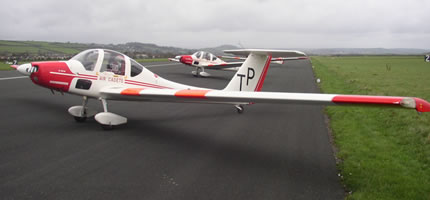
Grob Vigilant T1 Gliders
The Vigilant, despite being a powered aircraft, can also be flown as a glider by allowing the engine to idle, or by switching it off all together. On your first few flights you will experience the Vigilant being flown as a powered aircraft rather then a glider, as it's easier to teach the basics with the engine turned on. Where as a typical flight in a Viking will last 5-6 minutes before you need to relaunch, a Vigilant can go for up to 45 minutes.
Gliding Induction Courses
Your first 3 flights in a glider will consist of learning the Gliding Induction Course (GIC) syllabus. This involves learning basic handling of the aircraft on a 20-30 minute flight:
- GIC1 - Pitch
- GIC2 - Roll
- GIC3 - Yaw
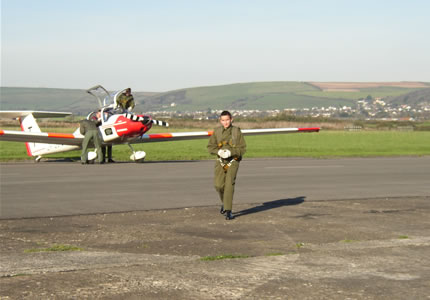
A cadet returning from a sortie
Gliding Scholarships
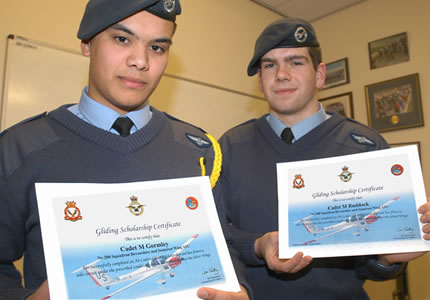
Gliding Scholarship Cadets
Once you have reached the age of 16 and obtained the Leading Cadet classification, you can apply for a Gliding Scholarship. Upon passing a medical check with your GP, you will be added to a waiting list to attend one of the two Volunteer Gliding Schools (VGS) that the squadron uses. If you are successful in gaining a place on a Gliding Scholarship you will complete 8-10 hours of gliding over the course of a week, or several weekends. If you pass, you will earn your Blue Wings.
If the training staff at the VGS deem you suitable you may have the opportunity to try your hand at gliding solo and earn yourself the Silver Wings.
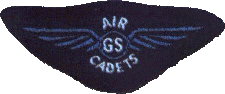
Gliding Scholarship Wings
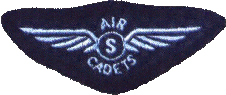
Gliding Scholarship Solo Wings
Advanced Glider Training
For those exceptional students a VGS may offer further glider training to a cadet and the cadet will act as a Flight Staff Cadet at the school, who will assist with the running of the unit as well as learning more advanced gliding via the Advanced Glider Training (AGT) course, which once complete will earn you your Gold Wings.
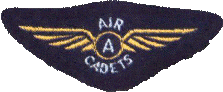
Advanced Glider Training Wings
Page last updated 2 January 2022.